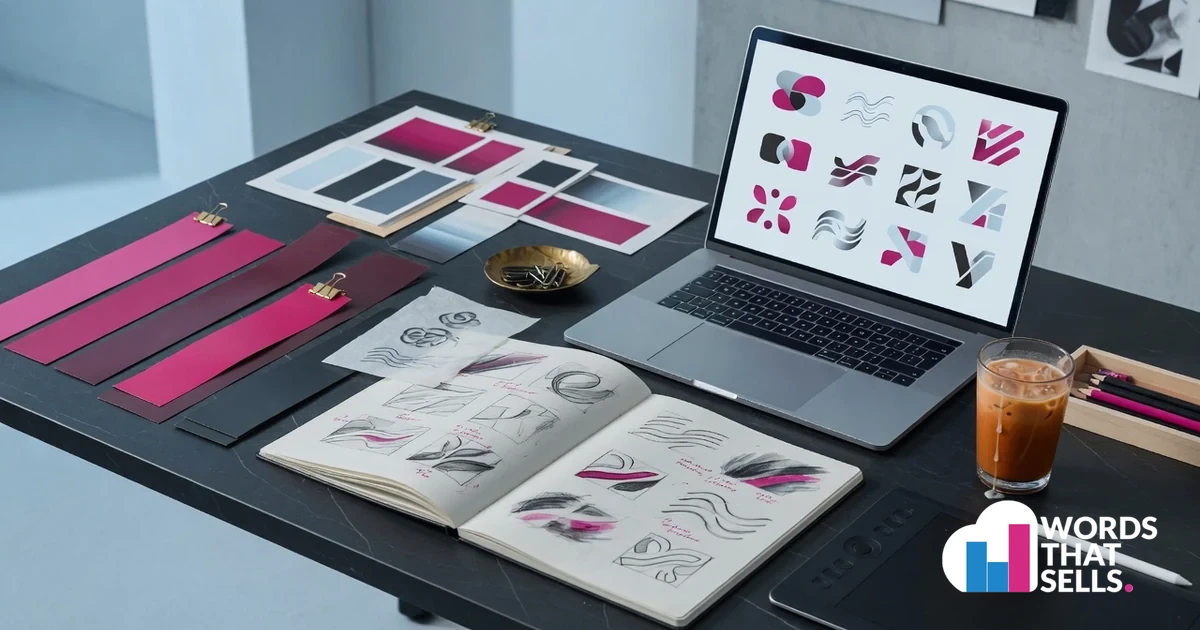
People judge your business faster than they can consciously think. Peer-reviewed research by Lindgaard and colleagues (2006, Behaviour & Information Technology) found that visual-appeal judgments formed in just 50 milliseconds correlated strongly with judgments made after ten times longer exposure. Before a Lao customer reads a single word of your website, menu, or Facebook page, your logo has already told them whether you look trustworthy.
This guide separates what science and market data actually prove about logo design from the recycled claims that circulate online — and grounds it all in the Lao and Southeast Asian market reality of 2026. Every statistic below is attributed to its original source.
1. Why Visual Identity Matters More in Laos Right Now
Laos is digitizing at a pace that makes visual branding a competitive necessity rather than a luxury. According to DataReportal's Digital 2025: Laos report, the country counts 4.97 million internet users — 63.6% of the population — and 4.25 million social media user identities, covering 54.3% of all Lao people and 85.4% of everyone online. Your logo now appears in feeds, profile circles, and search results hundreds of times before a customer ever visits your shop.
The regional momentum is even stronger. The Google–Temasek–Bain e-Conomy SEA 2025 report projects Southeast Asia's digital economy to surpass US$300 billion in gross merchandise value in 2025 — a 7.4× increase over the decade — and, for the first time, officially expanded its scope from six to ten markets, adding Laos alongside Cambodia, Brunei, and Myanmar. Laos is no longer a footnote in regional digital-economy analysis; it is on the map.
Who needs to compete visually in this environment? Almost everyone. Per a June 2026 report from the Lao National Chamber of Commerce and Industry, SMEs represent roughly 99% of formally registered enterprises in Laos and 94% of formal-sector employment. When nearly every business is small, professional presentation is one of the few affordable ways to look bigger than you are. That is exactly what a well-executed brand identity system does.
With 54.3% of the Lao population on social media and the country now inside the official e-Conomy SEA scope, your logo is doing more first-impression work in 2026 than your storefront is.
2. The Psychology of Logo Shapes — What Neuroscience Actually Shows
2.1 Sharp Angles Activate the Brain's Threat Center
In a landmark fMRI study, Bar and Neta (2007, Neuropsychologia) showed that sharp-contoured everyday objects produced significantly greater amygdala activation — the brain region that processes threat and fear — than the same objects with curved contours. The authors' hypothesis: sharp visual angles carry an implicit threat signal. Their earlier work (Bar & Neta, 2006, Psychological Science) confirmed the behavioral side — humans reliably prefer curved visual objects.
2.2 Circles Say "Warm," Angles Say "Durable"
Shape psychology translates directly into brand perception. Jiang, Gorn, Galli, and Chattopadhyay (2016, Journal of Consumer Research) ran five experiments showing that circular logos activate associations of softness and warmth — caring, sensitive, comfortable — while angular logos activate associations of hardness and durability. Neither is "better"; they answer different strategic questions.
- Choose rounded forms when trust, care, and approachability drive purchase — clinics, cafés, hospitality, family services, community platforms.
- Choose angular forms when strength, precision, and durability drive purchase — construction, machinery, logistics, security, engineering.
- Match shape to promise: a spa with a jagged angular mark and a heavy-equipment dealer with a soft bubbly one are both fighting their own geometry.
This is the level at which professional designers work — and where template generators fail, because a template cannot know what attribute your customers need to feel. It's the same strategic layer we apply in professional logo design projects for Lao businesses.
3. Color in the Lao Context: Own a Color, Respect Its Meaning
The most defensible truth about brand color isn't a percentage — it's category ownership. Coca-Cola owns red in soft drinks. Tiffany owns its blue in jewelry. UPS owns brown in logistics. When one brand consistently occupies one color in one category, the color itself becomes a recognition asset that competitors can't touch. (You'll often see a claim that color improves brand recognition "by up to 80%," attributed to a University of Loyola study — the original research was about color in document processing, so treat that number as folklore, not fact.)
In Laos, color also carries cultural weight that international style guides miss:
- Gold signifies splendor and the sacred — embodied by the golden Pha That Luang stupa in Vientiane, the national symbol itself. Gold accents read as prestige and cultural rootedness.
- Saffron and orange carry Theravada Buddhist associations of renunciation and simplicity across Laos, Thailand, and Cambodia — powerful, but to be used with respect, not as decoration.
- Red reads as luck and prosperity in Chinese-influenced business contexts — highly relevant given regional trade ties — which is nearly the opposite of the Western "urgency/danger" coding.
A logo built for the Lao market has to work in both symbolic systems at once: the local reading your Vientiane customer brings, and the international reading your tourist and expat audience brings. That dual-audience check is a core step in our branding consultation process.
4. What Getting It Wrong Costs: Two Famous Failures
4.1 Tropicana, 2009: −20% Sales in Under Two Months
In January 2009, Tropicana replaced its iconic orange-with-a-straw packaging with a minimalist redesign. Per Ad Age, citing Nielsen data, unit sales of Tropicana Pure Premium fell about 20% between January 1 and February 22 — roughly US$30 million in lost sales — while competitors posted double-digit gains. The redesign, part of a US$35 million campaign, was pulled by late February. Customers literally could not find the product on the shelf: the visual identity was the recognition system.
4.2 Gap, 2010: Reversed in Six Days
In October 2010, Gap unveiled a new logo — and reverted to the original within six days after immediate public backlash. The widely repeated "$100 million cost" figure is an estimate and disputed (the rapid reversal actually spared Gap most reprinting costs), but the reputational lesson is undisputed: changing a recognized identity without strategy or customer input is a gamble, not a refresh.
Both failures were expensive redesigns by giant companies with huge budgets. Budget doesn't protect you — strategy does. Rebrand for positioning reasons, test with real customers, and never abandon recognition equity casually.
5. What Getting It Right Earns: The Rebrand ROI Data
The strongest ROI dataset on rebranding comes from the financial sector. Adrenaline's ROI of Rebranding research, reported by the ABA Banking Journal (October 2025), found that rebranded U.S. financial institutions achieved a 13.6% compound annual growth rate versus the 7.4% industry average — nearly double. Over a ten-year horizon, rebranded banks posted 33% higher CAGR than the industry, and 86% of surveyed institutions said the rebrand positively impacted business value.
Consistency compounds the effect. The Lucidpress (now Marq) State of Brand Consistency survey of 400+ brand professionals found companies attribute roughly a 23% revenue increase to consistent brand presentation (a 2019 update put estimates as high as 33%). This is survey-based expectation data rather than audited financials — but the direction is consistent across every study: brands presented the same way everywhere earn more trust, and trust converts. Consistency across your logo, social media presence, signage, and content is where the identity investment pays back.
5.1 The Rule of 7: Why Consistency Beats Cleverness
Marketing's long-standing "Rule of 7" — traceable through the University of Maryland's communications guidance back to Claude Hopkins' 1923 Scientific Advertising — holds that prospects need repeated, varied exposure to a brand before recall and trust form. The exact number is a heuristic, not a law, but the mechanism is real: every exposure only counts if it's recognizably the same brand. A logo that changes color, proportion, or placement across touchpoints resets the counter every time.
6. The Technical Layer: Accessibility, Dark Mode, and Responsive Marks
A 2026-grade logo is a system, not a picture. The W3C's Web Content Accessibility Guidelines set the contrast standards professional designers build to:
| Element | Minimum Contrast Ratio | Brand Implication |
|---|---|---|
| Normal text | 4.5:1 | Brand colors used in headlines, buttons, and body copy must clear this bar |
| Large text (≥18pt, or 14pt bold) | 3:1 | Taglines and display type get slightly more room |
| UI components & graphics (SC 1.4.11) | 3:1 | Icons, form elements, and functional graphics in brand colors |
| Text inside a logo or brand name | Exempt | Your logotype itself has no contrast requirement — but everything built around it does |
The logo exemption is the detail most businesses miss: your mark can be as subtle as you like, but the moment your brand color becomes button text on your website, WCAG applies. A professional identity system delivers a color palette pre-tested against these ratios — including a dark-mode variant, since a mark designed only for white backgrounds breaks the moment a customer's phone switches themes.
The same system thinking applies to size. Your logo must survive from a 16×16-pixel favicon to a 512×512 app-store icon to a building sign — which is why modern identities ship as responsive logo systems (full lockup, compact mark, and icon) rather than a single fixed file.
7. What Professional Logo Design Costs — and What the Market Says It's Worth
Logo and brand identity is not a niche craft; it's the single largest segment of a serious global industry. Mordor Intelligence values the global graphic design market at US$55.1 billion in 2025, growing at 7.6% annually through 2031, with logo & brand identity the largest segment at 31.35% share (~US$17.3 billion). SMEs account for roughly 57% of the market, and Asia-Pacific is the fastest-growing region at ~11.1% CAGR — the exact demand curve Laos sits on.
7.1 2025–2026 Cost Benchmarks
| Provider | Typical Range (USD) | What You Get |
|---|---|---|
| DIY / online logo makers | $0–$100 | A template graphic; no strategy, no exclusivity, no file system |
| Freelancers | $100–$2,500 | Beginners $50–$300; seasoned professionals $500–$1,500+ |
| Design agencies | $2,500–$10,000+ | Strategy, research, full identity system, usage guidelines |
| High-end global agencies | $50,000–$100,000+ | Corporate identity programs for major brands |
Most small businesses spend between a few hundred dollars and $2,500 — a range that, viewed against the Tropicana and Adrenaline numbers above, is one of the highest-leverage line items in a marketing budget. For Lao SMEs, working with a regional agency means international-standard process at the lower end of the international price range, with the cultural verification a foreign designer can't provide. See our packages and pricing for how we structure it.
7.2 The AI Question
Generative AI has moved into design workflows fast: 99designs by Vista's survey of 10,000+ freelance designers found 52% using generative AI in 2024, up from 39% in 2023, and adoption has only accelerated since. What AI changed is the speed of exploration — dozens of directions in minutes. What it didn't change: trademark clearance, cultural checking (does this symbol mean something unintended in Lao or Thai contexts?), technical file preparation, and the strategic decision of which direction serves your positioning. The professional's job shifted from drawing options to judging them — which is why AI-assisted workflows lower the cost of good design without lowering the bar for it.
8. A Practical Checklist for Lao Business Owners
- Define the attribute first. Warm and caring, or strong and durable? Shape follows strategy (Jiang et al., 2016).
- Pick a color you can own in your category locally — and verify its Lao, Buddhist, and Chinese-context readings before committing.
- Demand a system, not a file: full lockup, compact mark, favicon, dark-mode variant, and WCAG-tested palette.
- Test at 16 pixels. If the mark dies as a favicon, it will die in a Facebook profile circle — where 85.4% of Lao internet users will meet it.
- Lock consistency rules before launch: exact colors, clear space, minimum sizes, forbidden uses. Consistency is where the reported ~23% revenue effect lives.
- Rebrand for strategy, never novelty. Tropicana and Gap are what novelty costs.
Learn More
- Why brand consistency drives revenue for small businesses
- Website design in Laos: what local businesses actually need
- Social media marketing in Laos: reaching 4.25 million users
- SEO in Laos: ranking in an under-served search market
Frequently Asked Questions
How much does professional logo design cost in Laos?
Global 2025 benchmarks put DIY logo makers at $0–$100, freelancers at $100–$2,500, and agencies at $2,500–$10,000+, with most small businesses spending a few hundred to $2,500. In Laos, agency work typically sits at the lower end of the international range while including the full identity system — files, color specs, and usage rules.
Do circular or angular logos perform better?
Neither is universally better. Research in the Journal of Consumer Research (Jiang et al., 2016) shows circular logos trigger warmth and care associations while angular logos signal hardness and durability. The right shape matches the attribute your customers need to feel.
Does a logo really affect sales?
Yes, in both directions. Tropicana's 2009 redesign coincided with a ~20% sales drop and roughly $30 million in lost sales in under two months (Ad Age/Nielsen), while rebranded U.S. financial institutions grew at 13.6% CAGR versus the 7.4% industry average (Adrenaline, via ABA Banking Journal).
What colors work best for a Lao brand?
Gold reads as sacred and prestigious (as on Pha That Luang), saffron/orange carries Buddhist associations, and red signals luck and prosperity in Chinese-influenced business contexts. Beyond symbolism, the winning move is choosing a color your brand can consistently own within its category.
Can AI tools design my logo?
AI can generate drafts quickly — 52% of surveyed freelance designers used generative AI in 2024, up from 39% in 2023 (99designs by Vista) — but it can't do trademark clearance, cultural verification for Lao/Thai contexts, technical file preparation, or strategic selection. Professionals use AI to explore, then apply judgment.
When should a business rebrand?
When your identity no longer matches your market position — after expansion or repositioning — or when the logo fails technically at small sizes or in dark mode. Rebrand for strategy, never novelty: Gap's 2010 logo lasted six days.
Ready to build an identity that works in Vientiane and beyond?
Words That Sells designs research-backed logos and brand systems for Lao and Southeast Asian businesses — culturally verified, WCAG-tested, and delivered as a complete system.
Request a free branding consultation Explore logo design services
Sources
- Lindgaard, G., Fernandes, G., Dudek, C., & Brown, J. (2006). Behaviour & Information Technology, 25(2), 115–126.
- Bar, M., & Neta, M. (2007). Neuropsychologia, 45(10), 2191–2200; Bar & Neta (2006), Psychological Science, 17(8), 645–648.
- Jiang, Y., Gorn, G. J., Galli, M., & Chattopadhyay, A. (2016). Journal of Consumer Research, 42(5), 709–726.
- Ad Age (2009), citing Nielsen — Tropicana post-rebrand sales data; The Branding Journal (2015, 2021) — Tropicana and Gap case studies.
- Adrenaline, ROI of Rebranding, via ABA Banking Journal (October 2025).
- Lucidpress/Marq, State of Brand Consistency (survey of 400+ brand professionals).
- W3C WAI, Understanding SC 1.4.3 Contrast (Minimum) and SC 1.4.11.
- DataReportal, Digital 2025: Laos; Google–Temasek–Bain, e-Conomy SEA 2025.
- Lao National Chamber of Commerce and Industry, via Xinhua (June 2026); ASEAN Secretariat MSME data.
- Mordor Intelligence, Graphic Design Market Report (2025); Fiverr, Looka, Vistaprint cost guides (2025); 99designs by Vista designer survey (2024).